BCACS Mission Statement

Battle Creek Area Catholic Schools, in partnership with parents, community and the Catholic Church, provide students with an excellent education and solid faith formation. Students will know the Faith, share the Faith, and live the Faith.
Showing posts with label Curriculum. Show all posts

Tuesday, April 18, 2017

Seniors "cap" their education by defending the faith

High school seniors are constantly demonstrating their skills, often for scholarships. For our St. Philip seniors, this includes demonstrating their knowledge of the faith.

The Diocese of Kalamazoo Capstone project is a yearlong undertaking, requiring diocesan high school seniors to defend the faith on a subject of their choice. It is a graduation requirement, a diocese-wide competition, and a scholarship opportunity.

“This project sums up not only their education at our schools but especially their faith,” Nicole Krajewski, St. Philip theology teacher, said.

The Capstone journey begins junior year when students pick a topic from an approved list based on the Theology curriculum. With help from teachers and priests, these students research their subject with an eye towards defending the church’s position.

Once the research is complete, students write a thesis paper on their findings, as well as prepare an 8-12 minute presentation on their topic. Students present their Capstones to a panel of school judges for a final grade in March.

Three students move on to the diocese’s Capstone competition held in Kalamazoo in May, presenting alongside finalists from Hackett Catholic Prep and Lake Michigan Catholic High School. The winning presenter receives a $5,000 scholarship, second place receives a $3000 scholarship, and third place receives a $2000 scholarship. All Capstone finalists receive a $500 scholarship.

[l. to r.] Noah Ellinger, Taylor Pessetti, Grayson Obey
Representing St. Philip this year are Noah Ellinger, Taylor Pessetti, and Grayson Obey.

Noah focused on human genetic manipulation, a subject he became familiar with during his Math and Science Center studies.

“Genetic manipulation is much more than adding a gene to somebody,” Noah said. “It takes on much more responsibility when you do things like that. [The project] really affirmed my Catholic beliefs and why you don’t do something like that.”

Taylor used the principle of double-effect – a four-step process to determine if something is morally right – to defend the church’s stance on abortion.

“I took a little bit of a science approach, going back to where life is defined as beginning, and I talk about the Catholic Church’s vision,” Taylor said.

Grayson tackled the morality of stem cell research, spotlighting adult stem cells and umbilical cord blood stem cells, which don’t destroy human embryos.

“I believe that it is important for others to be informed and aware of the other types of stem cell research being done and the results that have come from them,” Grayson said.

The Capstone’s true reward isn’t grades or scholarships, but maturity in the faith.

“They are going to have to defend their faith in college or at least live out their faith,” Ms. Krajewski said. “This helps them to know how to find resources to defend their faith [by] helping them learn how to teach themselves.”

Tuesday, April 11, 2017

Getting the facts from living wax

What happens when you combine history with a dash of Halloween? You get the BCACS Fourth Grade Wax Museum.

Posing as historical figures, fourth-grade students come to life with a press of a “button” on their hands. Laura LaLonde started the wax museum in 1999, which is currently under the stewardship of fourth-grade teachers Elizabeth Casterline and Ardis Vandenboss.

“It is an assessment of the students' reading comprehension, writing skills, and speaking skills,” Mrs. Casterline said. “It is also a creative outlet for students who enjoy demonstrating their learning in a unique way.”

It all starts with a historical celebrity wish list.

“Some [students] already ‘know’ who they want to be, but we remind them that it is done in a lottery fashion,” Mrs. Casterline said. “They have to have two or three choices because we don't want any repeats.”

Athletes, activists, princesses, and presidents are popular picks, but there can be surprises. This year’s museum had its first Phyllis Wheatley, the first published African-American poet.

"A lot of people didn't know who Phillis Wheatley was until I told them about her," Krystina Brutsche said.

After some research, students write and commit to memory a 1-2 minute speech.

“This seems like a nearly impossible task for some kids, but I never had a student who was unable to accomplish it,” Mrs. Casterline said.

Students then dress the part, often using wigs, makeup, props, and displays.

"A lot of us put a lot of detail into our costumes and speeches," Gabby Melges said.

Teachers mark one hand of each student with a black circle. Still and silent, students wait until a visitor presses their “button”. Once pressed, these wax figures come to life, giving their speeches, before resuming their frozen positions.

“The confidence the students gain through this experience is amazing,” Mrs. Casterline said.

"It was great learning how to say a speech in front of all those people," Alonso Campos said.

“I liked how we stayed frozen in between saying our speech,” Mary Sui said.

"My favorite part…was telling people how important these people are to our history," Breanna Ingraham said.

"I liked when people told me that they love my character," said Caleb Sebright.

Cameras clicked, visitors listened, and future BCACS fourth-graders got some ideas.

“We definitely tell the third-graders to look at the museum carefully because it will be their turn next,” Mrs. Casterline said.

We can’t wait!
Our 2017 Wax Museum

Tuesday, April 4, 2017

Building a better bridge

When Tina Sprague became the St. Joseph Middle School science teacher, she inherited science kits from the Michigan Department of Transportation. Mrs. Sprague liked what she saw, but needed to complete MDOT training to keep the kits.

So, she took the training.

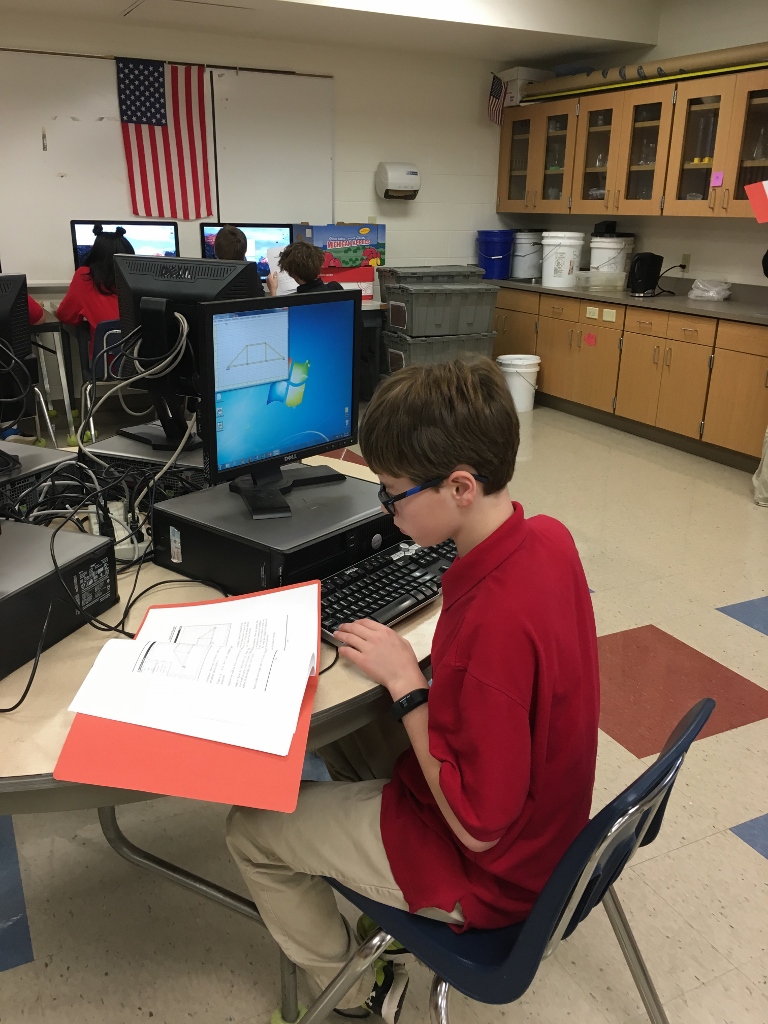
After Christmas, her eighth-graders took on the Bridge Builder kit. This civil engineering project involved physics, geometry, algebra, computer-aided design (CAD), teamwork, and the scientific process.

“The bridge-building one was really cool,” Mrs. Sprague said. “There was a lesson online where the kids can learn about bridge load, what types of bridges are best for what, and the different kinds of bridges.”

After the lesson, Mrs. Sprague gave each student a piece of thin balsa wood and an apparatus that held a bucket. They filled the bucket with sand until the wood broke. Next, they laminated two pieces of balsa wood together, testing it again vertically and horizontally.

Using these results and a basic CAD program, students designed their own box bridges. The computer virtually tested the strength of their digital bridges, after which students improved their designs.

“Then they get to build the bridge that they designed on the computer,” Mrs. Sprague said.

Students had to meet certain criteria using only the materials in the kit. Over the weeks they built, glued, and pinned their box bridges together.

“They all started out on an even playing field,” Mrs. Sprague said. “It all depended on their design. Some of them used all [of the material], some of them ran out because they didn’t think about how much it was going to overlap or the extra cuts that they made that were wrong.”

When the bridges were finished, the eighth grade invited the first grade to watch the testing. Students hung the bucket apparatus on each bridge, filling them with sand until they broke, delighting their young audience.

“[The bridges] held a lot more than I thought they would hold,” Mrs. Sprague said. “The kids were amazed, too. They didn’t think they would be as strong as they were.”

Afterward, students wrote up reports, detailing the scientific principles they used, the challenges they faced, and the conclusions they drew.

“I loved doing the bridge project because we learned how to make a bridge stronger by just changing a few simple things,” eighth-grader Nick Meyers said.

Best of all, Mrs. Sprague successfully supplemented the eighth-grade science curriculum with a hands-on activity, much like the Math and Science Center kits the sixth and seventh grades enjoy.

“This was my guinea pig class,” Mrs. Sprague said.

Next up is the Magnet Levitation kit, where students will build levitating foam vehicles.

“That’s what I’m going to research over Spring Break,” Mrs. Sprague said.

Tuesday, March 28, 2017

Creating their own success story

St. Philip High School’s senior internship is a rite of passage, the capstone of BCACS’ Crayons to College and Career program. This year, teacher Debbie Evans transformed this rite of passage into a bridge to the future.

“My number one goal was to build capacity in these students,” said Ms. Evans, a shared-time teacher with the Math and Science Center. “I come from the college level and I see the number one thing students struggle with is not college, it’s self-advocacy – having enough capacity to know they can open doors on their own. I wanted them to have a success story out of this.”

Ms. Evans used her background in professional development to turn the internship class into a project-based learning experience.

Each student had to find, design, complete and evaluate their own internship. Ms. Evans’ role was one of empowerment.

“The students were in the driver’s seat and that was very intentional,” Ms. Evans said. “I was really just a powerful cheerleader.

Ms. Evans helped students examine their aspirations, current skill sets, and personal strengths. Using these results, students determined their “skill gaps” and what type of internships would close these gaps.

Students created electronic portfolios and researched potential employers. Ms. Evans taught them strategies to get past an organization's gatekeeper. She conducted mock interviews with students, so they could up the odds of being hired.

When the students were ready, they called these businesses themselves.

Ms. Evans coached them through setbacks and pushbacks but didn't directly interfere or intervene. Along the way, some students, parents and even staff members voiced concerns, but Ms. Evans was staunch about everyone “trusting the process”.

The process worked. Every single student found their own internship.

As their field work progresses, students continually evaluate the goals they co-created with their employers. Evidence matters, as does the results.

“I thought that I would just do a lot of observing and maybe taking notes, but after the first week, I was given a dog to work with to learn firsthand, which I think tremendously affected how much I've learned,” said McKenna Haley, who is serving her internship at DogZone.
McKenna Haley found her internship at DogZone, where she is gaining experience working with animals. She plans to study Animal Behavioral Science in college and hopes to train service animals in the future.
“Sometimes, during a meeting or something, I'll catch myself falling in love with the job a little bit,” said Meagan Casterline, whose internship with event planner Jennifer Darling may include a trip to New York City. “I love how this internship is coaching my brain to think like an event planner would.”
Meagan Casterline [front, right] with Jennifer Darling [front, left] and the members of the Deep Fried Pickle Project [back row], during a concert Megan helped Ms. Darling organize as part of her internship.
The most important result for Ms. Evans is self-reliance.

“What has been most empowering is watching the students physically and mentally shift because they realized they made this happen,” Ms. Evans said. “This isn’t something someone did for them. This is something they intentionally created.”

Our seniors are doing amazing things, which is why, starting this week, our BCACS Blog will host a “Senior Spotlight”. Every Thursday until graduation, we will highlight different members of the Class of 2017. Read more about their internships, their aspirations, and where they plan to “grow” after graduation.

Tuesday, March 21, 2017

A truly "super" market

It’s the sweetest supermarket you will ever visit, full of tasty treats, thoughtful gifts, bargains and big grins. But you have to be quick. It’s only open one time every school year.

Why?

Because hosting the annual Second Grade Supermarket is a once-in-a-lifetime opportunity for our BCACS students.

“They look forward to it all year,” second-grade teacher Amy Doyle said.

Marcia McGrath started the Second Grade Supermarket at St. Philip Elementary School in 1996 and it’s been running ever since.

It fits a cross-section of the second-grade curriculum that includes their Social Studies unit on consumers and producers, their Math unit on counting money, and, of course, Theology.

“We donate all proceeds to an organization in need each year,” Mrs. Doyle said. “This year it is the St. Vincent Food Pantry.”

If you’ve had a second-grade student, you know the preparation is part of the fun.

Students bring 2-3 dozen baked goods as well as homemade, non-edible items. Often, parents help the children assemble their “wares” for market day. Together, they set the prices and create posters attracting customers.

In addition to a variety of delicious treats, this year’s second-graders sold stress pillows, inspirational rocks, homemade playdough, bracelets, magnets, small toys, and creative hair ties.

“The most unique item may have been the recycled products, including a sun catcher made from gallon milk jugs and a piggy bank made from plastic water bottles,” Mrs. Doyle said.

Students, teachers, and volunteers set up the market in the elementary school library, which is open during the school day for family, friends, staff and students.

Every elementary and middle school class has a chance to shop. Our second grade-entrepreneurs handle everything from explaining products to counting change.

“They love it,” Mrs. Doyle said. “[The second-graders] become little salespeople and they are super supportive of each other.”

Moreover, the students are excited to help a worthy cause with their own time, treasure and talent. Here is just a sample of what this year’s participants thought of their Second Grade Supermarket experience:

"I really liked selling things to other people and earning money for St. Vincent Food Pantry."

"I liked when the parents came in and bought stuff and donated money to us."

"I liked making the crafts with my family."

"I liked earning money and giving it to St. Vincent so we can help people with whatever they need."

Seeing their excitement and watching their hard work, makes it a win for their teachers and parents, as well as our greater community.

And that’s a bargain any way you look at it.


Collecting these sweet photos reminded me of the time I spent creating “supermarket” items with my kiddos. Priceless memories – yet another bargain.

Tuesday, March 14, 2017

Middle school students take the road less traveled...


St. Joseph Middle School was empty on March 3, 2017, but school was still in session.

All-girl and all-boy teams crisscrossed the city, exploring careers not typically associated with their gender.

This hands-on “Nontraditional Career Fair” is part of our Crayons to College and Career program. Kellogg Community College hosted the event, which was funded by a Calhoun Intermediate School District grant.

The girls began the day at the Regional Manufacturing Technology Center, exploring heating ventilation and cooling, pipefitting, robotics, maintenance, machining, automated manufacturing, electronics, and computer-aided design.

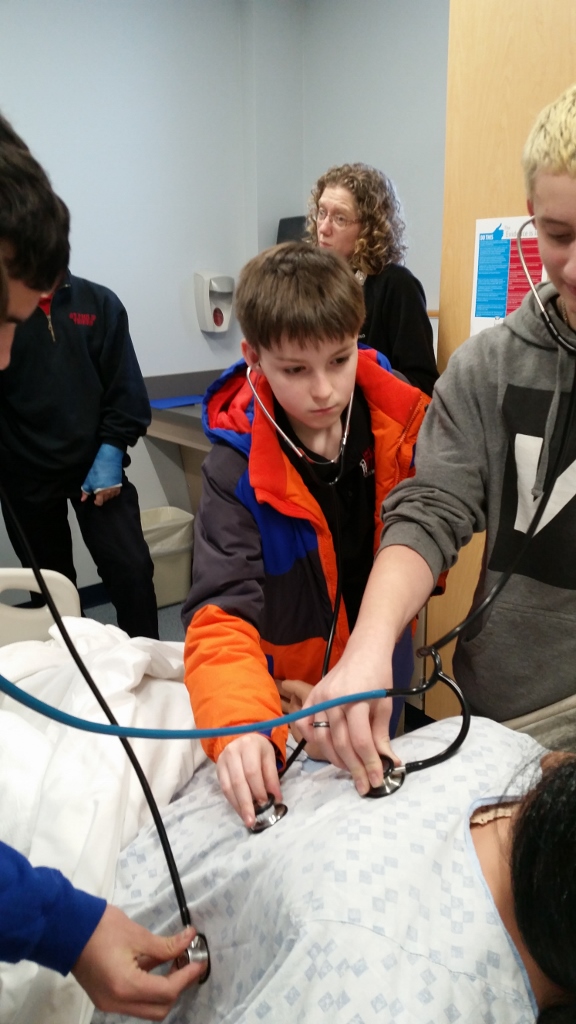
Meanwhile, the boys were on KCC’s main campus, exploring health field careers, such as physical therapy, radiation, magnetic resonance imaging, emergency medical services, and nursing.

“The girls jumped as sparks flew from the welding and electricity demonstrations and the boys were startled by a mannequin in the nursing simulation that sat up and said he was going to be sick,” said Katie Reed, St. Joseph assistant principal.

After lunch, the girls and boys switched locations.

“It was truly an amazing experience for our students to learn and understand the many opportunities that their future could hold while also gaining an appreciation for the people who work in manufacturing, teuchnology, and health fields,” Ms. Reed said.

The day was also unique because each ten-member team consisted of different grades.

“At the beginning of the day [my group] was kind of quiet, by the end of the day, I feel we had formed a little sisterhood,” said Kyra Rabbitt, director of student services and creator of Crayons to College and Career.
Students completed anonymous surveys afterward, showing an increase in nontraditional career awareness.

“We definitely saw movement and growth in terms of what they felt like they knew about the careers that they visited,” Mrs. Rabbitt said.

Many students saw careers they wanted to pursue.

“When we controlled the robot and checked the pulse and the heartbeat, it made me feel like a real nurse.”

“The best part was I got to learn about other jobs that I wasn’t interested in until now.”

“I can’t wait to be old enough to attend these classes. Thank you for this amazing school trip!”


Although a majority of students want to return next year, Mrs. Rabbitt favors doing so on a three-year rotation. She wants to keep college and career exploration fresh for our middle school students.

Future Crayons to College and Career opportunities may include investigation of creative fields or financial literacy classes as it applies to college.

Whatever form these programs take, our students can count on more “nontraditional” school days.

“This is an opportunity for us to grow and continue to provide college and career programming for students at their level,” Mrs. Rabbitt said.

Tuesday, March 7, 2017

Giving our kids "more" and "less"

Our schools strive to give students more, which sometimes means giving them less. Next year St. Philip High School will return to a six-hour day.

“I would prefer quality over quantity,” Director of Student Services Kyra Rabbitt said.

Graduation requires 24 credit hours, which divides neatly into four years with a six-hour day.  St. Philip changed to a seven-hour day several years ago because individual paths to graduation were no longer so neat.

The intention was to give students wiggle room to pursue the Math and Science Center, Calhoun Area Career Center, Kellogg Community College, and the Advance Placement courses of their choosing. Unfortunately, doing so reduced class time across the board.

As more students took advantage of these programs, the high school added an optional “zero hour”, making an eight-hour day possible.

Recently, students have been earning high school credit in middle school. Next year's incoming freshmen will have a Spanish I and a Health credit, and most will have an Algebra I credit.

The 24 credits required for graduation hasn't changed, which mean, under the current system, our kids’ “elective” credits have swollen to ten, if not more.

And “more” isn’t always more.

Shorter class periods are a huge problem when taking advanced coursework. Our modest student population – spread in several directions at eight different times – often doesn't have the numbers necessary to keep elective and AP course consistently viable.

Worse, our kids were fatiguing.

“We are expecting students to take college classes and do higher-level course work, but then expecting them to have an eight-hour day,” Mrs. Rabbitt said. “You don't take eight different classes in college. You have four, maybe five max.”

Returning to a six-hour day restores balance.

“Teachers have been wanting to go back to it for a while because they want more time with students,” Mrs. Rabbitt said.

What doesn’t change is a student’s ability pursue their own path to graduation. A careful curriculum realignment keeps the MSC, CACC, and KCC as viable options, and makes it easier for students to take AP courses.

Better yet, sustainable numbers will enable our AP program to expand, starting with AP Computer Science next year. The realignment makes room for a much-needed Freshman Technology course.

The optional zero hour will stay. And if a student really wants eight classes, St. Philip staff will find a way.


“If kids want to take more, they still can,” Mrs. Rabbitt said. “I will still work with kids on a one-on-one basis as I always have.”

Basically, St. Philip students are covered – “more” and “less”.

Parents with transition questions or concerns are encouraged to contact Mrs. Rabbitt at krabbitt@bcacs.org or St. Philip High School principal Vicky Groat at vgroat@bcacs.org.

Tuesday, January 10, 2017

Learning the ABCs of character

I received a lovely surprise last week. My daughter was named “student of the month” for the freshman class. Her nomination had nothing to do with grades or extra-curricular activities, but kindness.

How cool is that?

St. Philip High School's "Students of the Month" for Kindness
Kindness is one of several “student of the month” themes our middle and high schools celebrate. The list includes qualities like leadership, service, wisdom, cooperation, graciousness, honesty, patience, positive attitude, responsibility.

Why not test scores? We have some of the best in the area.

Why not athletic success? We have our share of swag.

Why not? Because that is not Christ’s definition of success.

St. Joseph Middle School's "Students of the Month" for Leadership
The two most important commandments are to love God and to love your neighbor as yourself. Talents are gifts from God, but these gifts are ineffective without good character. Our Battle Creek Area Catholic Schools aim to develop our children’s character alongside their gifts.

This is evident in our new program “Crayons to College and Career”, which recently received a grant from the Calhoun ISD. Creator Kyra Rabbitt wanted to encourage our littlest Tigers to think about higher education and their future goals.

What does it take for a successful future?

Most would say good grades and a great plan, but Ms. Rabbitt and her team believe there’s another component.

“Life is about more than grades and what you can put on paper,” Ms. Rabbitt said. “You need personal skills and to be strong in your faith. We want to celebrate the whole student and not just the academic piece.”

This is why “Crayons to College and Career” is starting with the ABCs of character.

Each week, our preschool through fifth-grade students will concentrate on two character traits, starting with “A for Attitude” and “B for Behavior”. Teachers will lead class discussions about these traits, read special books that correspond with these traits, and, at the end of the week, nominate students who best exemplify those traits.

It’s a mini-version of the middle and high school’s student of the month.

St. Joseph Elementary School's "Students of the Week" for Attitude and Behavior
All nominated students will attend a year-end celebration breakfast, during which a lottery will determine ten $100 college scholarships winners.

“We are so proud of all of our students and their daily behavior and hope this program will enhance traits they already possess, encourage new behaviors, all while instilling the importance of higher education for future success,” St. Joseph principal Sara Myers said.

There are plenty of talented people in the world, but not enough people with good character. Good character enables us to use our talents to love God and our neighbors.

Our Battle Creek Area Catholic Schools cultivate good character, promising our children a bright future in this life and the life to come.

How cool is that?


Comments, questions, have a few suggestions? Write us at BCACS.Blog@gmail.com.